
BNG for NSIPs: What Changes in November 2026?
From 2 November 2026, Biodiversity Net Gain (BNG) will become mandatory for Nationally Significant Infrastructure Projects (NSIPs) in England. This means developers who apply for a Development Consent Order (DCO) on or after this date will need to deliver at least 10% biodiversity net gain.
NSIPs include large-scale energy, transport, water, waste water and waste projects that meet the thresholds set out in the Planning Act 2008. These projects can include power stations, major roads and railways. Due to their scale, they can often have significant impacts on habitats. These new mandatory requirements will be a welcome contribution to nature recovery in England.
This comes as an extension of the existing BNG requirements for most developments in England.
Developers will now have to consider biodiversity gains as part of their planning process and assess any potential impact of their project on habitats.
Which projects will be affected?
The new requirements apply to NSIPs in England that fall within the scope of the legislation. Developers must follow the relevant government biodiversity gain statement for their project type.
To understand which rules apply to their developments, developers who are planning on submitting DCOs on or around 2nd November should check the latest government guidance.
How will developers meet their 10% BNG requirement?
Eligible NSIPs will need to deliver at least a 10% biodiversity net gain under these new rules. This will be calculated using the statutory biodiversity metric, which takes into account the value of habitats within the affected by the development within the order limits before and after development.
Before considering biodiversity gain, developers must ensure they avoid or reduce any potential impact of their development. Unlike ordinary planning applications, NSIP developers are not required to prioritise on-site BNG before securing off-site units. The guidance allows on-site and off-site gains to be considered simultaneously, although the metric favours gains delivered on-site or closer to the development.
In practice, delivering all the required BNG on-site will not always be possible. Off-site biodiversity net gain units can therefore form a significant part of the solution.
The final option is statutory biodiversity credits – however these are deliberately priced high as a last resort. Developers must buy two credits for every unit needed and show why on-site and off-site options were not possible.
The benefits of off-site BNG for NSIPs
Off-site BNG units will provide a practical solution for developers who are not able to deliver all their BNG requirements on-site.
For some infrastructure projects, the scale of development and habitats affected can make it challenging to deliver the required 10% biodiversity net gain on-site. Space may be limited, existing habitats difficult to enhance, or creating new habitats may add complexity to an already extensive planning process.
Purchasing off-site units allows developers to meet their remaining BNG requirements without having to establish and manage additional habitats themselves. Off-site BNG can be particularly beneficial where space is limited or developers lack the expertise to manage habitats over the long term.
Off-site BNG provides other benefits. Notably, the BNG units will be secured and managed for at least 30 years. For NSIPs, off-site units must be on the biodiversity gain sites register, secured by a section 106 agreement or conservation covenant, and allocated to the development before works begin. This benefits the habitats and their wildlife, as well as taking the responsibility out of the hands of the developers.
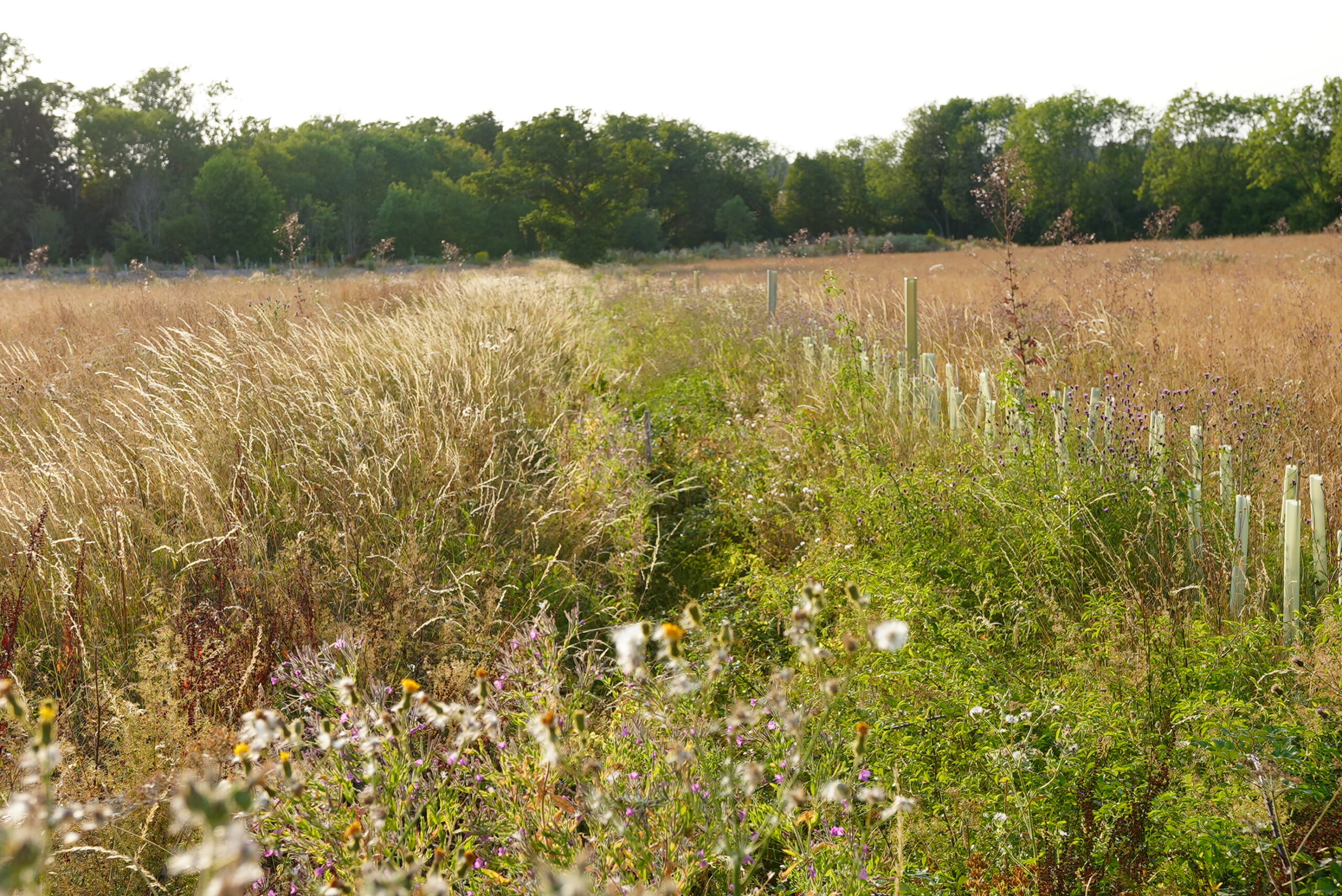
Choosing the right off-site BNG units
When considering off-site units, the most important factors are location and habitat type. Off-site units can be located anywhere in England, but units within the same Local Planning Authority (LPA) or National Character Area (NCA) as the development retain their full value. Units in neighbouring or more distant LPAs or NCAs are reduced in value by the spatial risk multiplier. Units must also satisfy the metric’s trading rules, which depend on the distinctiveness of the habitat lost. High distinctiveness habitats must be replaced like for like, while lower distinctiveness losses can be met with the same broad habitat type or a higher distinctiveness habitat. Area, hedgerow and watercourse units are separate and cannot be substituted for one another.
Developers should explore any available options early on in their planning to ensure they can secure the correct units for their development. Working with an experienced provider, such as BNG Units Ltd, will make it easier to identify and secure suitable units.
How should developers prepare for the changes to BNG for NSIPs?
To avoid any surprises later on, developers should identify any potential challenges and explore suitable BNG options early. This should include:
- Understanding which rules apply – check whether the project falls into the new NSIP BNG rules and when they will apply.
- Assess existing habitats – work with ecologists to understand the biodiversity value of the site, including which habitats can be protected or enhanced.
- Explore off-site BNG early – on-site and off-site options can be considered side by side for NSIPs, so engage with off-site providers early to secure suitable units, ideally within the same LPA or NCA.
- Plan for the long term – ensure the project complies with all BNG requirements, not only immediately post-development, but also in the 30 years following.
If you are planning a project and would like to explore your off-site BNG options, contact BNG Units Ltd.